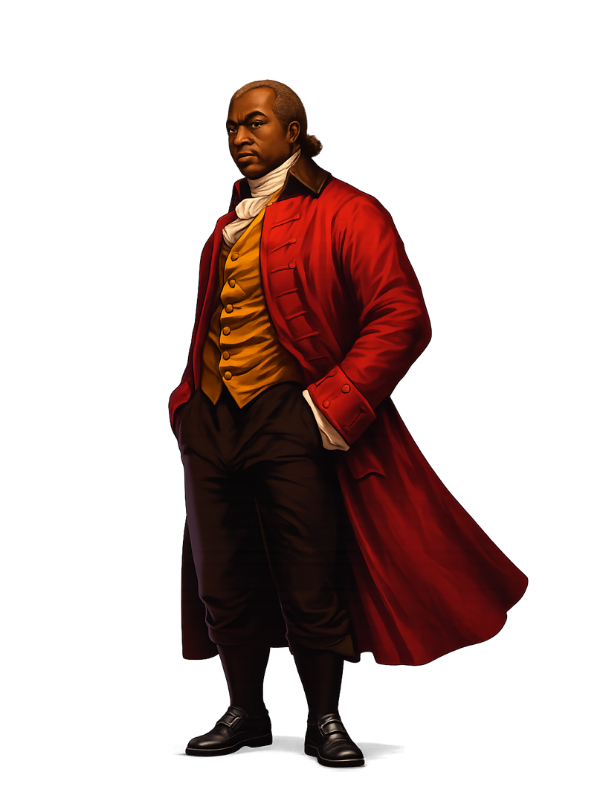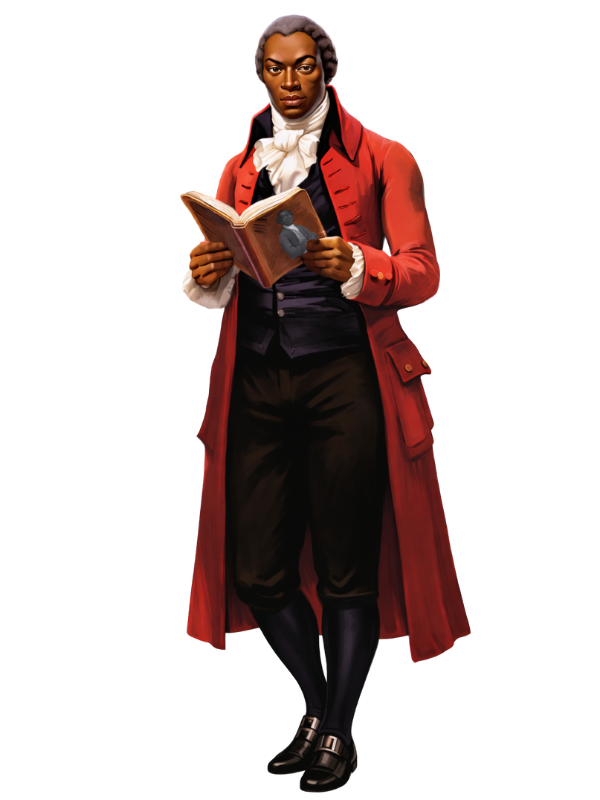

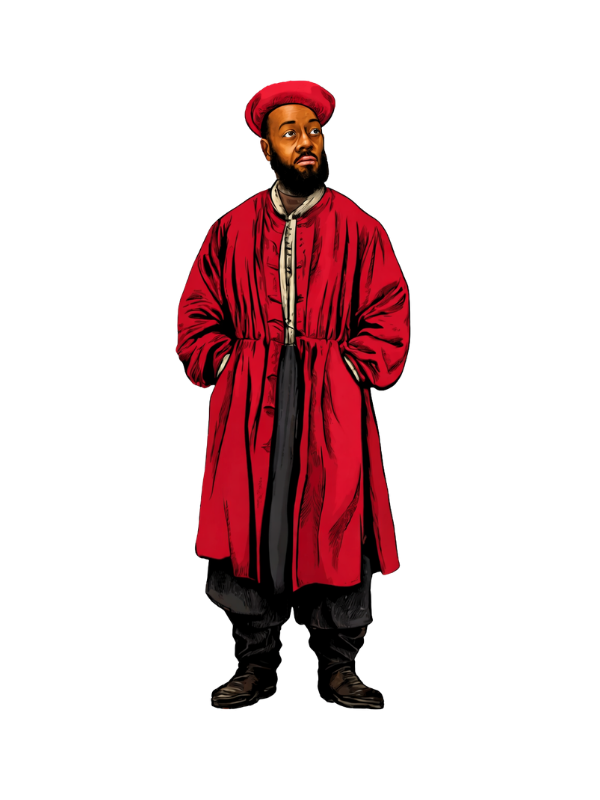
His silk dressed the rising elite of Elizabethan London.
Reasonable Blackman wove silk in Southwark when London’s luxury trade ran on skilled hands.
Across the 1570s to the 1590s, parish records name him as a craftsman supplying the city’s merchants, nobles, and performers, his cloth moving through Bankside in the years the Globe and Rose theatres drew their crowds. The work was exacting.
Silk weaving demanded training, patience, and a reputation strong enough to keep wealthy buyers returning, and his held. He stands among the earliest African people in Tudor England recorded by name and by trade, his life set down in the ordinary ledgers of parish administration rather than in legend.
That documentation carries weight. It places a Black craftsman in the working heart of Elizabethan London, present and earning, his skill part of the fabric the city wore.
His record is in the London parish records. His card is in the deck.
Explore the record
Timeline
- 1579First recorded in the parish of St Saviour’s, Southwark, working as a silk weaver in late Tudor London.
- 1587Living in the neighbouring parish of St Olave’s, Tooley Street, married and supporting a household.
- 1592Lost two of his children during the plague that struck London.
0 salutes
I salute Reasonable Blackman, who built a silk-weaving craft and a household in Tudor London.
Lived alongside